Easy Mongolian Beef Recipe- Quick & Flavorful Dinner
Mongolian Beef is a dish that truly lives up to its legendary status. Have you ever craved that perfect balance of sweet, savory, and just a hint of spice, all clingin extractg to tender, crispy beef? That’s the magic of Mongolian Beef, and it’s a craving I’ve personally indulged in countless times. What makes this particular stir-fry so universally adored? It’s the irresistible interplay of textures – that delicate crispness of the marinated beef giving way to a rich, glossy sauce. The secret, I believe, lies in the unique flavor profile that’s both comforting and exciting, a harmonious blend of soy sauce, garlic, gin extractger, and a touch of sweetness that dances on your palate. Get ready to unlock the secrets to creating this iconic Mongolian Beef in your own kitchen!
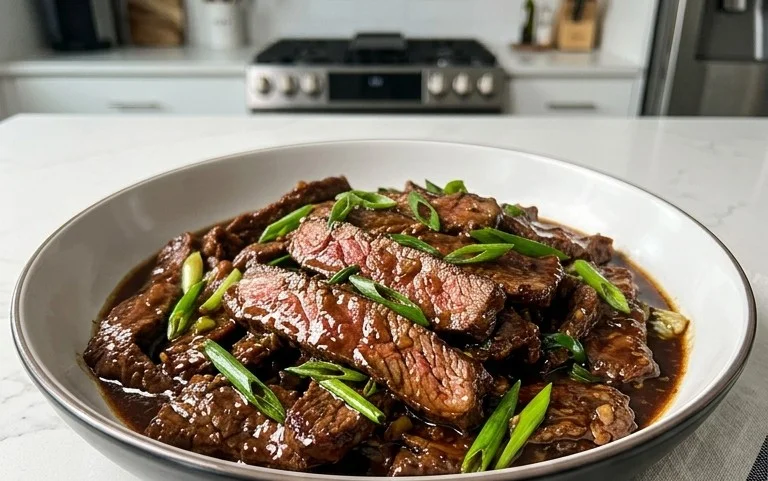
Mongolian Beef
Mongolian Beef is a restaurant favorite for a reason – it’s incredibly savory, slightly sweet, and that satisfying chew of tender beef is simply irresistible. Forget those pricey takeout menus, because I’m going to show you how to recreate this classic dish right in your own kitchen. This recipe focuses on achieving that perfect balance of flavors and textures that makes Mongolian Beef so beloved. We’ll be marinating the beef for tenderness, creating a rich sauce, and stir-frying everything to perfection. Get ready to impress yourself and anyone lucky enough to share this meal with you!
Ingredients:
Cooking Instructions:
The key to tender, flavorful Mongolian Beef starts with properly preparing the beef. Take your thinly sliced flank steak and place it in a medium bowl. In a separate small bowl, whisk together 2 tablespoons of water, 2 teaspoons of Shaoxing rice vinegar, ½ teaspoon of Kosher salt, and ¼ teaspoon of baking soda. The baking soda might seem unusual, but it’s a fantastic tenderizer, especially for leaner cuts of beef like flank steak. It helps to break down the proteins, resulting in a wonderfully tender bite. Pour this mixture over the beef and gently toss to ensure every slice is coated. Let it sit at room temperature for about 15-20 minutes. This marinating step is crucial for both tenderness and flavor. After the marinating time, drain any excess liquid and then sprinkle the 2 tablespoons of cornstarch over the beef. Toss again until all the beef slices are lightly coated. This cornstarch coating will help create a barrier when frying, keeping the beef tender and allowing the sauce to cling to it beautifully.
While the beef is marinating, let’s get the sauce ready. In a small bowl or measuring cup, combine the 1 tablespoon of Shaoxing rice vinegar, 3 tablespoons of granulated sugar, and 2 tablespoons of regular soy sauce. Whisk these ingredients together until the sugar is mostly dissolved. Set this aside. This simple sauce base is what gives Mongolian Beef its characteristic sweet and savory flavor profile. The Shaoxing rice vinegar adds a subtle complexity that plain white vinegar wouldn’t provide, and the sugar balances the saltiness of the soy sauce perfectly.
Now it’s time to cook! Heat 1 tablespoon of neutral oil (like vegetable, canola, or peanut oil) in a wok or a large skillet over medium-high heat until it’s shimmering. Carefully add the marinated and cornstarch-dusted beef to the hot pan in a single layer. You might need to do this in batches to avoid overcrowding the pan, which can steam the beef instead of searing it. Overcrowding will lead to soggy, less flavorful beef. Sear the beef for about 1-2 minutes per side, or until it’s nicely browned and slightly crispy. Don’t overcook it at this stage; it will cook more when we add the sauce. Once browned, remove the beef from the pan and set it aside on a plate. You’ll notice a lovely crust forming on the edges – that’s exactly what we want!
Add a tiny bit more oil to the same wok or skillet if needed, then add your minced garlic and the cracked black pepper. Stir-fry for about 30 seconds until fragrant. Be careful not to burn the garlic. Next, add the sliced yellow onion and the white parts of the green onions. Stir-fry for 2-3 minutes until the onions begin extract to soften and become slightly translucent. We want them tender but still with a little bit of bite. The white parts of the green onions add a slightly stronger onion flavor that complements the dish.
Pour the prepared Mongolian sauce into the wok with the onions and garlic. Bring the sauce to a simmer, stirring constantly. Let it bubble for about a minute to thicken slightly. Now, return the seared beef to the wok. Add the green parts of the green onions. Toss everything together to coat the beef and vegetables evenly with the thickened sauce. If you’re using the rice vermicelli, now is the time to add it. Submerge the cooked and drained vermicelli into the sauce and gently toss to coat. The vermicelli acts as a wonderful vehicle for the sauce and adds a lovely textural element to the dish. Cook for another minute or two, just until the beef is heated through and coated in the glossy sauce. The cornstarch from the beef and the simmering sauce will create a beautiful, thick glaze. Serve immediately with steamed rice.
Conclusion:
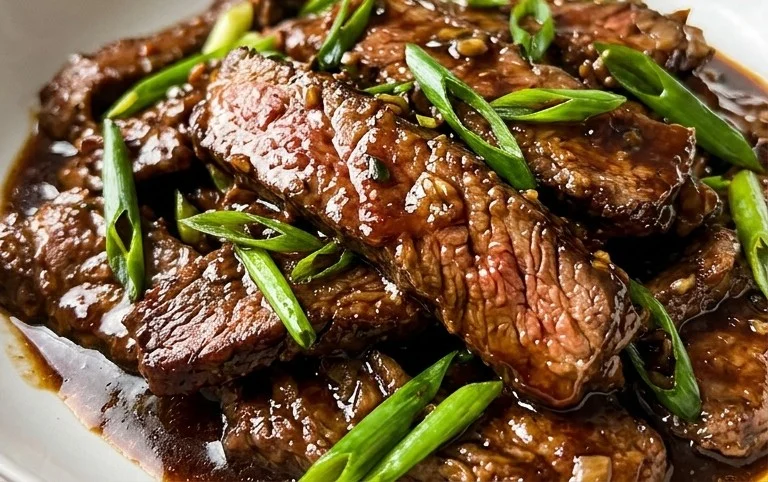
And there you have it – your guide to creating a truly fantastic Mongolian Beef right in your own kitchen! This recipe is a winner because it delivers that addictive sweet, savory, and slightly spicy flavor profile that’s so satisfying, all without the fuss of complicated techniques. The tender strips of beef coated in that luscious, glossy sauce are truly irresistible. It’s the perfect dish for a weeknight meal when you crave something special, or for impressing guests with your culinary prowess.
I love serving this Mongolian Beef over fluffy steamed white or brown rice to soak up all that delicious sauce. For a more complete meal, consider adding some steamed broccoli, snow peas, or bok choy on the side. If you’re feeling adventurous, why not try swapping out the beef for thinly sliced chicken or beef? You could also experiment with adding a pinch of red pepper flakes for extra heat, or a drizzle of toasted sesame oil for an intensified aroma. Don’t hesitate to make this your own! I truly encourage you to give this Mongolian Beef recipe a try; you’ll be amazed at how simple it is to achieve such restaurant-quality results.
Frequently Asked Questions:
What is the best cut of beef for Mongolian Beef?
For the most tender results, I recommend using flank steak or sirloin. These cuts are naturally tender and slice beautifully against the grain, which is crucial for achieving that signature melt-in-your-mouth texture in your Mongolian Beef.
Can I make this recipe ahead of time?
While the sauce can be prepared a day in advance and stored in the refrigerator, it’s best to cook the beef just before serving to maintain its optimal tenderness and texture. Reheating can sometimes toughen the meat.
Mongolian Beef
A popular American Chinese dish featuring thinly sliced beef stir-fried in a savory and slightly sweet sauce. This recipe offers a pork substitute and alcohol-free vinegar option.
Ingredients
-
1 pound pork shoulder (thinly sliced (between ⅛ to ¼ inch thick))
-
2 tablespoons water
-
2 teaspoons rice vinegar (non-alcoholic)
-
½ teaspoon Kosher salt ((a little less if using fine salt))
-
¼ teaspoon baking soda
-
2 tablespoons cornstarch
-
1 tablespoon oil (any neutral oil)
-
1 teaspoon cracked black pepper (more or less to taste)
-
1 tablespoon rice vinegar (non-alcoholic)
-
3 tablespoons granulated sugar
-
2 tablespoons regular soy sauce
-
1 tablespoon garlic (minced (about 2 cloves))
-
½ large yellow onion (sliced)
-
1 bunch green onion (cut into 2 inch pieces (separate the white and green parts))
-
1 ounce rice vermicelli (medium thickness (optional; use more or less to preference))
Instructions
-
Step 1
In a bowl, combine the thinly sliced pork, 2 tablespoons water, 2 teaspoons rice vinegar (non-alcoholic), ½ teaspoon Kosher salt, ¼ teaspoon baking soda, and 2 tablespoons cornstarch. Mix well to coat the pork evenly. Let it marinate for at least 10 minutes. -
Step 2
In a separate small bowl, whisk together the remaining 1 tablespoon rice vinegar (non-alcoholic), 3 tablespoons granulated sugar, 2 tablespoons regular soy sauce, and 1 tablespoon minced garlic. Set aside. -
Step 3
Heat 1 tablespoon of neutral oil in a wok or large skillet over medium-high heat until shimmering. Add the marinated pork in a single layer (cook in batches if necessary to avoid overcrowding) and stir-fry until browned and cooked through, about 3-4 minutes. Remove the pork from the wok and set aside. -
Step 4
Add the sliced yellow onion to the same wok and stir-fry for 1-2 minutes until slightly softened. Add the white parts of the green onions and stir-fry for another 30 seconds. -
Step 5
Pour the prepared sauce mixture into the wok and bring to a simmer, stirring constantly until it thickens, about 1-2 minutes. -
Step 6
Return the cooked pork to the wok. Add the green parts of the green onions and 1 teaspoon cracked black pepper. Toss everything together to coat evenly in the sauce. Cook for another minute until everything is heated through. -
Step 7
If using, prepare the rice vermicelli according to package directions and serve the Mongolian Beef over it.
Important Information
Nutrition Facts (Per Serving)
It is important to consider this information as approximate and not to use it as definitive health advice.
Allergy Information
Please check ingredients for potential allergens and consult a health professional if in doubt.